On November 16, 2025, at 3:00 PM, the 460th “Hou Wailu Academic Lecture” was successfully held. It took place in the 503 Meeting Room of the School of Foreign Languages at the Northwest University Chang’an Campus. The lecture was jointly organized by the Office of Social Science Research, the School of Foreign Languages, and the School of Regional and Country Studies of Northwest University. Professor Li Anshan from the School of International Studies at Peking University was invited to give a thematic research presentation. He is also the Honorary President of the Chinese Association of African History Studies and a Foreign Fellow of the Royal Academy of Morocco. His presentation was titled “The Interaction Between Colonial Rule and Discipline Construction: The Case of British Colonial Rule in Africa.” The lecture was hosted by Professor Cao Ruonan, Dean of the School of Foreign Languages. Both faculty and students from the School attended.
First, Professor Cao Ruonan extended a warm welcome to Professor Li Anshan on behalf of the School. She briefly introduced his academic background and research achievements. Professor Li began by explaining how Western knowledge discourses have demeaned and distorted the image of Africa, focusing on aspects of space, time, and the understanding of human beings or race. Using ample historical evidence, he presented “an Africa unknown to many”. He highlighted its historical civilizations, natural resources, and academic achievements. Regarding European colonial rule in Africa, Professor Li analyzed the hypocritical and cunning methods hidden under the “civilizing mission” theory. He discussed colonization and Christianity, as well as colonial governance methods. Next, focusing on three aspects, schools, disciplines, and discourse power, he explained how colonizers established colonial schools and promoted colonial education so as to maintain and consolidate colonial rule. For the relation between British colonial rule and disciplinary construction, Professor Li used anthropology as a primary example and pointed out its limitations as a product of colonial expansion---western anthropology served colonial institutions and was constrained by them, and in the post-colonial period, it faced an identity crisis. Finally, Professor Li addressed the fallacies in British colonial discourse. These included theories of superiority, redemption, and progress. He summarized lingering issues in post-colonial Africa, such as identity and borders. In conclusion, he encouraged the audience to maintain a global perspective and humanistic spirit in future research. He advised upholding China's stance while grounding work in historical facts. This approach, he said, would help researchers reflect on themselves, gain energy, and contribute to human progress.
During the Q&A session, faculty and students raised questions on various topics. These included “China's economic support for Africa,” “the advantages and disadvantages of transitioning from foreign language studies to regional and country studies,” “the diversity of Western discourse,” and “building an independent academic knowledge system.” Professor Li Anshan provided thorough responses based on his own academic experience.
The lecture lasted nearly for three hours. Professor Li Anshan shared his extensive research experience, profound academic insights, and sincere scholarly passion, providing academic nourishment to the attendees. He also pointed out numerous issues, perspectives, and methods for African studies. After the lecture, Professor Cao Ruonan once again expressed sincere gratitude to Professor Li Anshan. She encouraged faculty and students to actively engage in African studies. She urged them to seek academic progress and improvement.

Speaker: Professor Li Anshan

Host: Dean/Professor Cao Ruonan
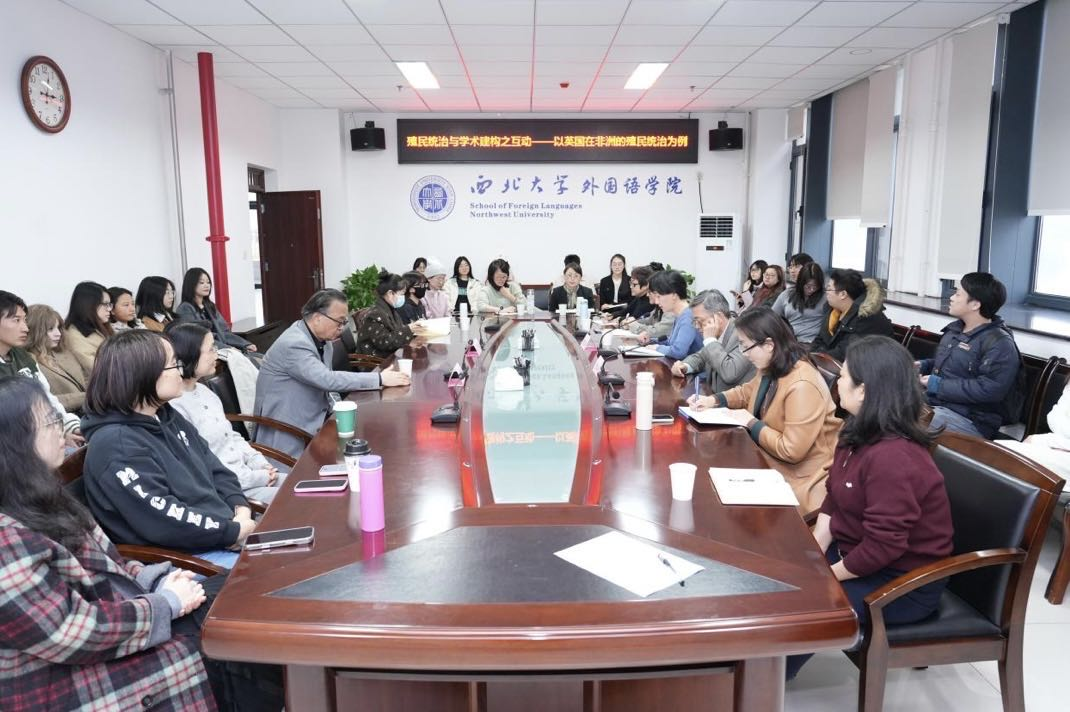
Meeting Room
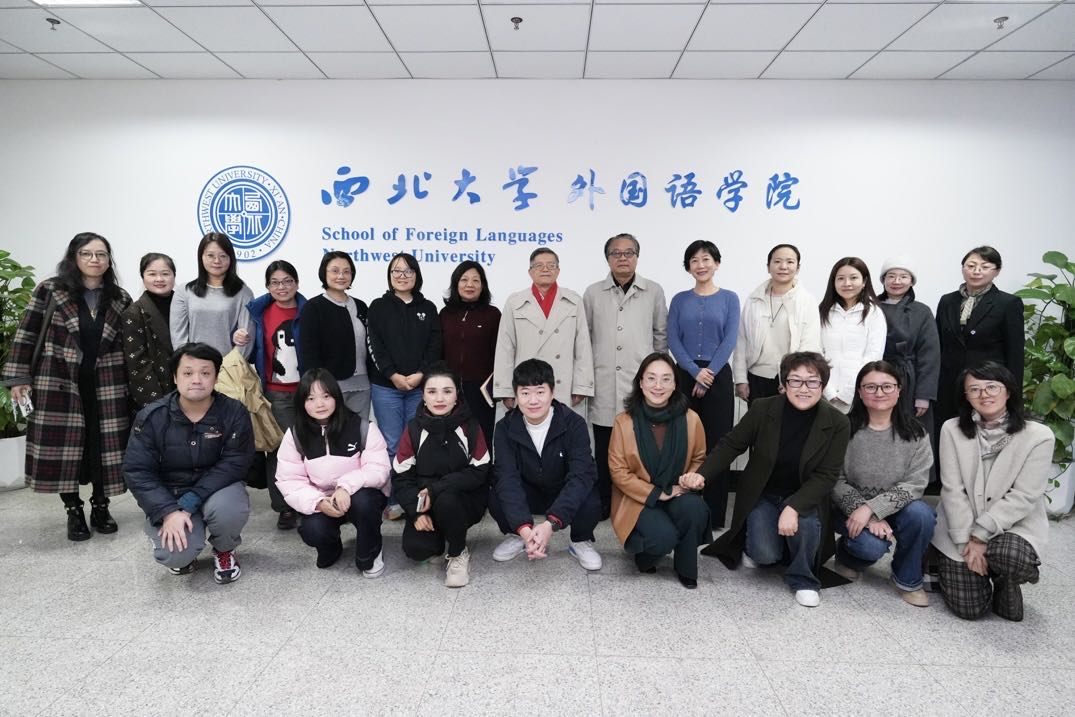
Group photo
 School Homepage
 中文
中文